
Philadelphia Booking Releases and Inmate Records
Philadelphia is unique among Pennsylvania cities because it operates as a consolidated city-county. The Philadelphia Department of Prisons manages the city's entire jail system, functioning as both the municipal and county correctional authority. When someone is arrested in Philadelphia, they are booked at one of the city's correctional facilities and their information becomes part of the public record. Booking releases and inmate records are available through the department's online inmate locator, which allows searches by name, PIN number, or booking number. This page explains how the system works and where to find records.
Philadelphia Quick Facts
How Philadelphia's Jail System Works
Most Pennsylvania cities rely on a separate county jail to hold arrested individuals. Philadelphia is different. Because it is a consolidated city-county, the Philadelphia Department of Prisons serves both functions. There is no transfer to a separate county facility. Arrests made by the Philadelphia Police Department result in processing directly within the city prison system.
The main intake facility is Curran-Fromhold Correctional Facility (CFCF), located in Northeast Philadelphia. CFCF handles the majority of new bookings and serves as the primary processing hub. After intake, individuals may be housed at the Detention Center (DC), Riverside Correctional Facility (RCF) for women, or the Alternative and Special Detention Center (ASDC) depending on classification and housing needs. The combined system holds roughly 4,500 individuals on any given day, with a total capacity near 6,000.
The Philadelphia Department of Prisons maintains a public inmate locator at phila.gov/prisons/inmate-locator. Searches can be conducted by full name, PIN number, or booking number. Results include current housing location, charge information, and court dates when available. The locator is updated regularly as cases move through the system.
Note: Booking information appears in the system after intake processing is complete, which may take several hours following an arrest.
The Philadelphia inmate locator provides access to current custody information for the city's prison system.
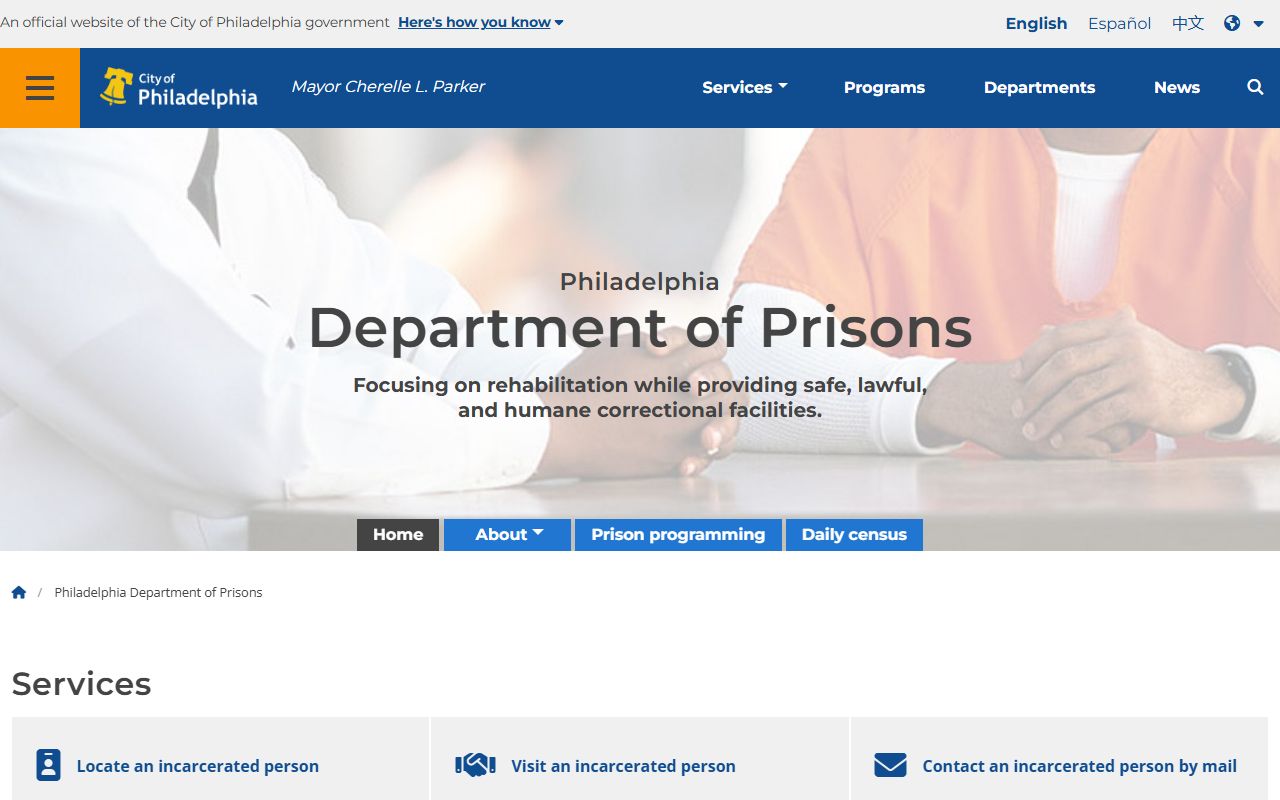
Records in the locator reflect real-time housing assignments across all Philadelphia Department of Prisons facilities.
Court Processing and Arraignments
After a person is booked into the Philadelphia prison system, their case moves to the First Judicial District of Pennsylvania for court proceedings. Philadelphia Municipal Court handles preliminary arraignments, bail hearings, and summary trials. Arraignments in Philadelphia are available around the clock, 24 hours a day, seven days a week, through the Municipal Court. This continuous availability means that someone arrested at any hour will have an arraignment opportunity without extended delay.
Court records for Philadelphia cases are accessible through the Pennsylvania Unified Judicial System (UJS) web portal. The UJS portal allows public searches of docket information by defendant name, docket number, or case type. Court records show charges filed, bail amounts set, next scheduled appearances, and case disposition. The portal covers all state courts within the First Judicial District.
Philadelphia operates several problem-solving courts within its judicial system. Mental Health Court provides specialized handling for defendants with serious mental illness. Drug Treatment Court offers an alternative track for qualifying cases involving substance use. Veterans Court addresses cases involving military veterans. These specialized dockets appear in the UJS portal alongside standard criminal cases.
The VINE (Victim Information and Notification Everyday) system is available for Philadelphia cases. VINE allows registered users to receive automated notifications when an inmate's custody status changes, including releases and transfers. Registration is free through the VINELink website.
Note: Bail amounts and conditions are set at arraignment and may be modified at subsequent hearings as the case progresses through the courts.
Programs and Services Inside Philadelphia Prisons
The Philadelphia Department of Prisons operates a range of in-custody programs. Educational offerings include GED preparation and basic literacy instruction. Vocational training programs cover culinary arts, HVAC systems, and custodial maintenance. These programs are designed to prepare incarcerated individuals for re-entry into the community after release.
Substance abuse treatment and mental health services are available within the facilities. A reentry resource center assists individuals who are approaching release. The department partners with community organizations to extend services both inside the facilities and after release.
Since Philadelphia functions as a consolidated city-county, there are no separate Philadelphia County booking releases to search. All records flow through the single city prison system. This simplifies the search process compared to other Pennsylvania cities, where records may be split between a city police database and a county jail system.
Requesting Records Under the RTKL
Pennsylvania's Right-to-Know Law gives the public the right to request government records. The full text of the law is available through the Pennsylvania General Assembly website. The Philadelphia Department of Prisons and the First Judicial District are subject to these provisions. Requests for booking records, incident reports, or other documents held by city agencies can be submitted through the city's open records process.
The Pennsylvania Office of Open Records oversees the RTKL statewide. Their portal at openrecords.pa.gov provides guidance on how to file requests, what records are available, and how to appeal a denial. For court records specifically, the UJS portal often provides direct access to documents without the need for a formal RTKL request.
Criminal history background checks through the state are handled by the Pennsylvania State Police. The ePATCH system (Pennsylvania Access to Criminal History) provides online access to criminal history record information. Certified records are primarily used for authorized purposes.
The PA DOC also maintains a separate statewide inmate locator for individuals in state correctional institutions. The PA DOC inmate and parolee locator covers people serving state sentences, which are separate from the local Philadelphia jail population. Someone serving a sentence of two years or less would be in the Philadelphia Department of Prisons system rather than the state system.
Note: State sentences are served in PA DOC facilities, while sentences under two years are typically served locally in city or county facilities.
Finding a Specific Individual
To locate someone held in Philadelphia, there are several starting points. The Philadelphia Department of Prisons inmate locator at phila.gov/prisons/inmate-locator accepts searches by name, PIN, or booking number. The UJS portal at ujsportal.pacourts.us provides court records and case status. VINE at vinelink.com allows registration for custody status change notifications. For individuals who may have been transferred to a state facility, the PA DOC locator at pa.gov covers state correctional institutions.
If a case is recent, allow time for the arrest to be processed and entered into the system. New bookings typically appear within a few hours of intake at CFCF. Court dates are assigned after the initial arraignment and appear in the UJS portal once scheduled.
For visitors, the Philadelphia Department of Prisons maintains visiting schedules and rules on their website at phila.gov/departments/philadelphia-department-of-prisons. Visiting rules vary by facility and housing unit. The department also publishes information about telephone and mail services for people with loved ones inside the system.
Note: Visiting schedules and policies are subject to change; always verify current rules directly with the facility before visiting.
Nearby Pennsylvania Cities
Philadelphia neighbors several other major Pennsylvania cities. Each has its own police department and routes arrested individuals to the applicable county jail.